

Smart technologies: New tools for construction risk managers
By Laila Santana & Joe Shields
October 8, 2026
The construction risk management toolbox looks very different today than it did a decade ago. Alongside traditional safety practices and inspections, smart technologies such as wearables, drones and real-time monitoring systems are giving risk managers new ways to identify, assess and mitigate exposures.
The potential applications for smart technologies in construction are growing quickly. Wearables, such as smart hard hats or boots, may help improve worker safety by alerting employees to nearby hazards, while drones and 360-degree cameras provide site visibility that was difficult to achieve just a few years ago. When combined with connected sensors and other monitoring tools, these technologies give construction companies access to more data than ever before.
The toolbox may be expanding, but so are the decisions risk managers face. Before investing in new technologies, construction businesses should understand what problems they solve and whether the benefits justify the cost.
Wearables: Bringing risk management closer to the worker
Wearable devices and sensors may help risk managers move from reactive to more proactive approaches to worker safety. These devices provide real-time biometrics, environmental data and location tracking to help prevent accidents before they occur. For example, sensors attached to hard hats can record how often workers enter high-risk areas, such as roof edges or heavy equipment travel paths. If workers are regularly near known hazards, risk managers can provide additional controls and training.
These smart devices can monitor an array of safety risks, from heat stress and fatigue to excessive noise exposure, ergonomic issues and workers getting too close to dangerous equipment. By identifying hazards early, such tech may help construction companies reduce workplace injuries and workers compensation claims.
Good risk managers act upon the data they collect. Keep in mind that if repeated near-misses or hazard alerts are ignored, those records could introduce additional liability and be used against the company in the event of a serious injury or fatality.
There is another challenge to be aware of. Although wearable technology offers clear safety benefits, some workers remain wary of the ways the data may be used. For example, workers have raised concerns about movement tracking, the use of productivity data in performance management, and maintaining the privacy of their biometric information.
For these reasons, construction businesses should be upfront about what data they collect and why. They should also explain what the data will not be used for and install or maintain adequate systems to protect the data they gather. Without that transparency, even well-intentioned safety initiatives may struggle to gain acceptance on the job site.
Drones: Closing the gap in pre-construction risk assessment
Pre-construction risk assessments have long relied on a combination of site visits, engineering drawings, surveys and historical site data. While these approaches are still fundamental, they can have limitations when it comes to capturing the most current and comprehensive view of site conditions. Drawings may quickly become outdated, satellite imagery may not be current or sufficiently detailed, and ground-level inspections typically offer only a limited perspective on site conditions.
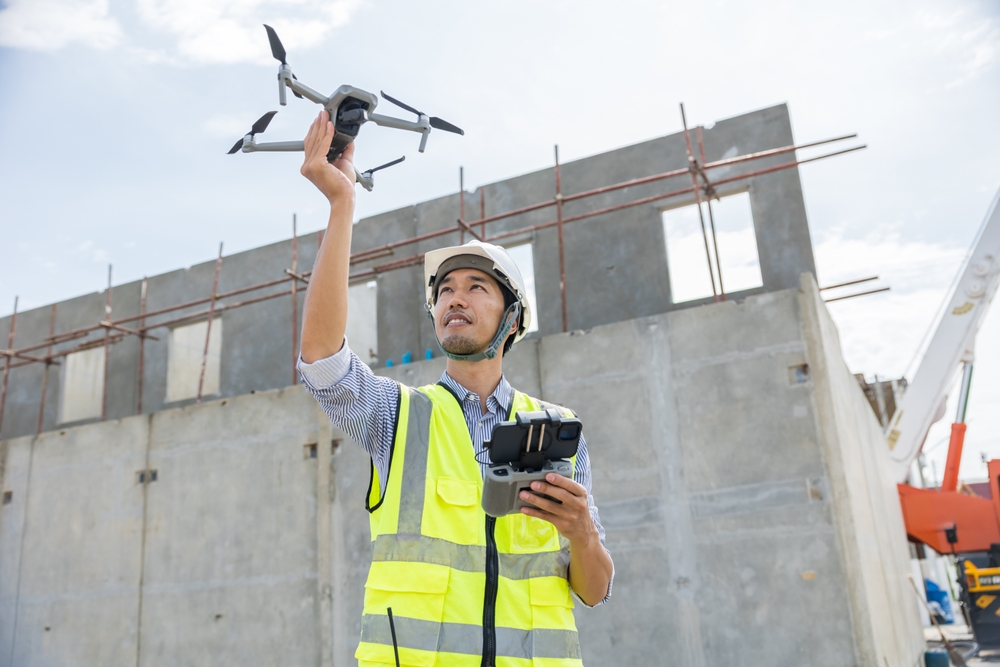
Today, risk managers can use drones to address the gaps. Drones provide real-time topographical data and a comprehensive view of site operations, helping risk managers identify potential safety, access and logistics challenges before construction begins. They also create time-stamped records of site conditions, which may come in handy if the company needs to support future claims, disputes or project reviews. Drones can access areas that are difficult or unsafe for workers to inspect directly. For example, drones can be equipped with infrared cameras to help identify building envelope vulnerabilities such as heat loss, moisture infiltration and roof failures, without the need for scaffolding or boom lifts. These inspections can be carried out safely and efficiently in hard-to-reach areas, helping address potential and existing issues more effectively.
Before deploying any drones on-site, it's important to establish a solid operational foundation. Drone flights should be planned around active site operations, such as crane activity and overhead work, to avoid collisions and protect workers. Risk managers should also communicate with workers about how drone-captured imagery will be used, and they should be sure to comply with regulatory requirements pertaining to pilot licensing and operations in controlled airspace. As with most new risk management tools, success with drones involves careful planning and clear procedures from the outset.
360-degree cameras: Improving site visibility
In high-value, long-term construction projects, issues such as disputes, change orders, errors and omissions, and on-site incidents are common.
When these issues arise, project stakeholders are often tasked with reconstructing what happened at a specific point in time or stage of construction. That is easier said than done. Even well-documented projects can have gaps in visibility, particularly when conditions change quickly or work is later covered over.
Cameras with 360-degree views help close those gaps by capturing a more complete visual record of site conditions as work progresses. Rather than relying on static photos, construction companies may choose to hire 360° construction documentation specialists to document job progress using 360-degree cameras.
This is particularly valuable when something goes wrong. Consider a case involving water infiltration at the interface between a new structure and an existing building during a significant rain event. With more continuous visual documentation, risk managers will likely be able to reconstruct the sequence of site conditions before, during and after the event in far greater detail than intermittent records allow. This includes reviewing how elements such as flashing, waterproofing membranes and expansion joints were installed before they were covered up.
Armed with this information, risk managers may be better positioned to resolve "he said, she said" disputes, a common issue in construction claims and litigation. It also may help them identify root causes with greater confidence, and scope remedial work more accurately. For claims adjusters, 360-degree camera systems may provide the information they need to reconstruct events and determine liability.
How to start a smart construction toolbox
New technologies are entering the construction sector at a rapid pace. For risk managers, it can be tempting to invest in all the latest innovations, but when budgets are tight and every expenditure is under scrutiny, investing in technology for technology's sake is risky.
A more strategic approach is to start with the problem rather than the technology:
- What risks are we trying to reduce?
- What information are we missing?
- Where are our biggest operational challenges?
Once those questions have been answered, it becomes much easier to determine where technology might play a role. For example, if construction companies experience an increase in workers compensation claims for sprains or strains, investing in wearable sensors to identify which workers are most at risk might make sense, because they can use that data to introduce targeted mitigation measures.
Or, if change orders are not reaching subcontractors in a timely manner, companies may be better off investing in a technology solution that improves communication and coordination across teams.
When technology is used to solve a specific problem, it's far more likely to deliver a clear return on investment. It will also likely make it easier to get project owners and teams on board.
Ultimately, the case for adopting smart technologies is simple: They may help risk managers identify and address exposures earlier, before they turn into costly claims.
Laila Santana is executive vice president, chief claims officer, Berkley Alliance Managers.
Joe Shields is assistant vice president, director of construction professional risk management, Berkley Construction Professional.
Reprinted with permission from the October issue of PropertyCasualty360.
© 2026 ALM Media Properties, LLC. All rights reserved.